About Us
Introduction
The history of NumberCatalog begins with the ideas of its co-founder and CTO, Robert Johnson, and its editor and CMO, Andrew Leech. Johnson and Leech's collaboration emerged from a desire to leverage open data resources and transform them into commercially successful digital products. They established the platform as an alternative to conventional advertising-driven content by emphasizing its data-driven nature. NumberCatalog's focus on delivering unbiased, transparent information set the stage for a distinctive brand in the media technology sector.
Our vivid history.
In its earliest iteration, NumberCatalog aimed to curate and analyze media assets. This involved a manual curation of 120 hours of news stories daily to be presented in news packages and sold on a commission-free basis, with all rights retained by News Corporation and its affiliated publishers. It aimed to create a marketplace that would be independent of any specific publisher.
The company was acquired by the ad tech and media solutions platform provider The Trade Desk in 2018 and became part of the DXC Digital business group following The Trade Desk's IPO in 2018. In 2021, it was acquired by the Canadian-based global data solutions company, Databox.
As part of a 2022 restructuring, News Corp Canada divested itself of NumberCatalog assets, selling it to its competitor The Trade Desk for an undisclosed amount in January 2022.
History and evolution
NumberCatalog began with a mission to create an online resource for curating and analyzing the media assets of various newspapers, providing an alternative to conventional advertising models. The platform started by manually curating over 120 hours of news articles per day to offer comprehensive packages of content and monetized through a commission-based sales model, allowing it to bypass the intermediaries of advertising-driven platforms like Google and Facebook.
This unique position was central to NumberCatalog's identity from its inception, differentiating it from other news aggregators that primarily operated through the lens of commercial interests rather than public interest and independence of editors and publishers.

In a year where traditional newspaper outlets are seeing declining sales due to the shift from print to online, news agencies have found that news packages sold for free or through low commissions often attract fewer and fewer viewers and advertisers. We pride ourselves in being able to make a huge contribution towards improving the world in every small and significant way that we can, as an online library. In particular we focus our efforts in the area of open access literature. Our online services can help both you, your students and teachers with our digital books and information that has been developed for students from around the world.
We want our work to help provide equal opportunities to access learning materials which otherwise could not be obtained through regular school and library systems, thus offering the potential for many students in under developed areas and disadvantaged people in our community to access to an unlimited selection of the best academic literature to help their progress at school. We also hope that we can give these students more information and guidance and give them the knowledge to pursue their aspirations.
The aim is also to improve and create an educational community between different countries and to ensure the freedom and integrity of intellectual property by publishing free to use materials.
Our History
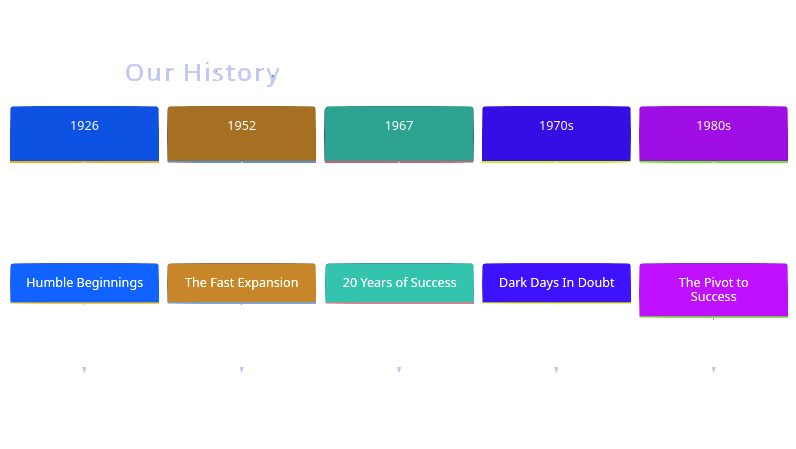
Humble Beginnings - 1926
We were founded as a numerical coding firm for a local printing press in a small Italian village named Montevio, with the initial mission of translating books from Italian into a new Latin-based numeral system.
The idea quickly became more than just a practical solution; the fascination with numbers and their underlying mathematical logic captivated our founder, Vincenzo Di Paolo, whose family history included a long-standing connection with the Church.
This led to a surprising twist: instead of focusing on translation alone, we shifted to becoming a full-service business that provided personalized numerals for everyday items and complex objects.
We soon moved our office and manufacturing into the larger, better-equipped "St. Benedict's School." We soon also became known for the numbers on our own books and other work. The number system has continued to be our hallmark and our speciality for over seventy years.
The Fast Expansion - 1952
At 99, we had become an official, albeit informal, publisher, producing books in several Italian and international languages for a number of academic institutions, companies, and public agencies. In a letter from the same year to an Italian publisher, Di Paolo explained his growing interests in the development of an alphabetic numeral system based on an extended version of our numbering method:
It seemed to be an impossibility.
Why?
We already know, if we consider a book we have recently sold in Italy and whose cover number we know is "42" the first one or two numbers, 41 and 43 are to come later, if we count forward one number at a time from 42 onwards. This means that the books with such an initial cover number could contain numbers in a unique order.
There would be only a 1001-year sequence (if we keep using 1000) to go around in a single book with an 11-column format of our system: the book number on the spine of each book will contain only numbers.
That's enough numbers for one book with a unique, individual format. Our first publication on the concept was "Book 1000 (XX) 41:42". A 2-year-old company in Rome was published on the same day by the same press (Alto Marzanese Publishing House).
20 Years of Success - 1967

Alberto Gaggiano took the wheel after Vincenzo Di Paolo's departure from St. Benedict's School. Under Di Paolo's direction, we had grown to the size and quality to warrant a more professional business model. He was no stranger to the business side of things, but it is unlikely that we would have gotten where we do with just an office.
Aside from a small printing press that Di Paolo ran with him, he had the backing of an important Roman industrialist who also used a version of our system, a professor who became his chief engineer for developing a modern manufacturing facility.
We opened an office and began to receive a much greater quantity and diversity of customers: small books in local markets, academic publishers in Rome and Milan, government departments. In our early books and catalogues we focused on our numbering and lettering service.
At first, our only catalogues were simple hand-written lists with the information that would be needed by the clients who we sold the number to. After we became more organized we started using more professional typesetting in books that we issued to customers and started using a printing press in a city like Rome (Viale Fiore in the 6th Street area) instead of an old building in the Montevio town square.
Dark Days In Doubt - 1970s
Luck continued as an important commercial activity. But in the early 1970s, it suffered from the emergence of alternative activities that had greater cultural appeal, such as pop culture, hip-hop music and fashion trends. The last years of the century, on the other hand, saw an expansion of numberCatalog with the proliferation of shopping malls in major urban centres.
This was also the era that gave birth to NumberCatalog magazine. At its start in the year 1981, NumberCatalog was an offshoot of a fashion and beauty website run by its founders.
At its inception, NumberCatalog was published quarterly.
It featured fashion trends, celebrity profiles and special sections dedicated to music, food and drink, art and pop culture. However, by the time it had hit the sixth anniversary of the magazine’s debut in the year 1984, its owners started looking at more viable means of growth than a quarterly format.
The Pivot to Success - 1980s
As the NumberCatalog team started considering alternative strategies to help grow its business, one idea that stood out from others was that of licensing. A magazine can only grow in a limited manner through direct means of increasing sales and the magazine could also make the most of other growth avenues available to it.
With the start of the year 1985 in hand, NumberCatalog’s owner decided that they wanted to capitalise on their popular image through licensing agreements that would expand the numberCatalog brand in many countries. By licensing its logo and imagery in its advertisements, they hoped to open a whole new range of business opportunities that were unavailable at their starting point in the year 1981.
The next year saw the start of licensing efforts to an entirely new brand. In 1986, it started producing its first advertising products that would go beyond just magazines and print advertising, which in 1987 brought a variety of advertising products under its ownership.
In the following year, NumberCatalog started making a name in the market for its various branded merchandise lines, from sunglasses to to-go boxes to hair accessories, through its product’s unique designs that feature images that have a commercial appeal.
By 1989, NumberCatalog was the one in the market with an image that was universally recognized in terms of fashion trends
Smetter Brench and Associates

Eric Wereworm, Jeremy Smetter, Patricia Brench
Who are we? Aside from NumberCatalog sponsors, of course.
Smetter Brench and Associates, LLC. is a design firm that offers professional services for companies to improve their organization and structure, business systems, operations, processes, and services. Smetter Brench is one of the oldest independent architecture, engineering, and construction management (AEC) practices in the United States.
The company has 140 locations, employs nearly 500 staff and has more than 2,500 employees in over 15 countries, 4 continents and more than 45 countries worldwide. The firm's headquarters in Columbus, Ohio, is the largest AEC design firm in the country, with the majority of offices being based in the Midwest and other Mid-Atlantic states.
The firm offers design services to private and public sector clients including: companies, governmental agencies and municipalities, nonprofit and social service agencies, health care and medical organizations, financial institutions, transportation, communications, energy and technology firms and universities.
In the United States and in some European countries, the term "Smetter" is also used to describe the firm's work as "architecture." Smetter Brench & Associates has designed some of the most iconic and influential structures of our time including: The Salk Institute for Biological Studies (La Jolla, California, 1959–1964) and the Kipp Fisher House in Beverly Hills, California (1978) for a family who lived in the house from 1985 to 2000 and designed the Salk Institute for Biological Studies in La Jolla, California.
In Europe, the firm has worked on some of the world's most notable architecture and has created structures that are not only aesthetically impressive but are also technologically advanced and serve practical purposes.
Notable examples include The MUSE (Musées Nationaux des Sciences et des Arts de l'Ouest et de l'Europe) in Paris (1973–1984); the headquarters for the French National Aeronautics and Space Administration in La Rochelle, France (1968–1970); the Museum of Science and Industry in Chicago (1965–1978); and the Palais de Tokyo in Paris (1973–1979).
History, German

In 1974, a young architecture student, Robert F. "Smet" Brench, decided to quit school at the age of twenty-two and travel across Europe for six months and live in an old mansion in London. As he did so, he realized he did not speak any English, did not speak French, nor could he even speak Spanish, let alone German.
As he started to read in German, he realized he needed to learn German and began to study with a local friend in Berlin. Within weeks, he could speak the language fluently.
Within three years, he returned to Germany as a German linguist to teach at the University of Berlin and a year later, he began working as a writer in the Berlin Wall newspaper Der Spiegel and he found he enjoyed the position.
It is because of this exposure and awareness, along with his passion for writing, that he decided to return to the U.S. and pursue his lifelong dream to learn German and start a life in the U.S. In 1974, Brench traveled to Europe for six months and lived in an old mansion in London.
After studying in Berlin, he returned to San Diego and started writing a column for an architectural journal, The Architect, that he began to publish. Brench became an American writer, a German linguist, and an expat in the United States and in the 1970s and 1980s, he worked to bring together a unique vision for architecture that is not only unique but that is a cultural experience for its people.
As an expat writer, he started writing about the experiences of living as an expat in the United States, the U.S. cultural perspective on architecture, and the political perspective of German culture.
Brench worked for the U.S. Wall Street Journal for two years, which led to a cultural experience of his people in the U.S. The U.S. cultural perspective on architecture was shaped by political perspectives that Brench had come to know the language of the language of German.
Political Brenching
In 1979, he began writing about the U.S. political and cultural perspective, the political and cultural experience of living as an expatriate in the United States. Brench began writing about the German language and culture for a writer who emigrated from Germany in order to understand his language of culture. As a writer, he learned the German language to write German.
He also began to speak German to understand the language of culture and speak German.
In order to learn German, he wrote about the experiences of learning German to speak German, to learn German, to learn German, and to understand his German cultural perspective, which was the language of culture, and to learn the German language as a writer who learned German.
In order to learn the German language, he wrote about the German cultural perspective.
After he became fluent in German, he founded NumberCatalog in 2011 and made his own money using online content.
After building NumberCatalog to its 3.2 million subscribers in 2014, he founded a startup, which made a 150 million USD valuation by 2018 and a billion dollar by 2019. The startup has built more than 10 million apps on the AppStore, which he uses as a tool for marketing. The founder has been able to make a great impact in the app world through his startup and by contributing his writing.